
01 · LOOM REPAIR
Damaged wiring diagnosis and repair
Open circuits, shorts, corrosion, heat damage, previous repairs and sections of loom that need repairing or rebuilding.
Automotive wiring · Lancashire
Damaged loom repairs, connector repinning and custom wiring for engine swaps, ECU conversions, campers and horseboxes—mapped, built and tested as a complete system.
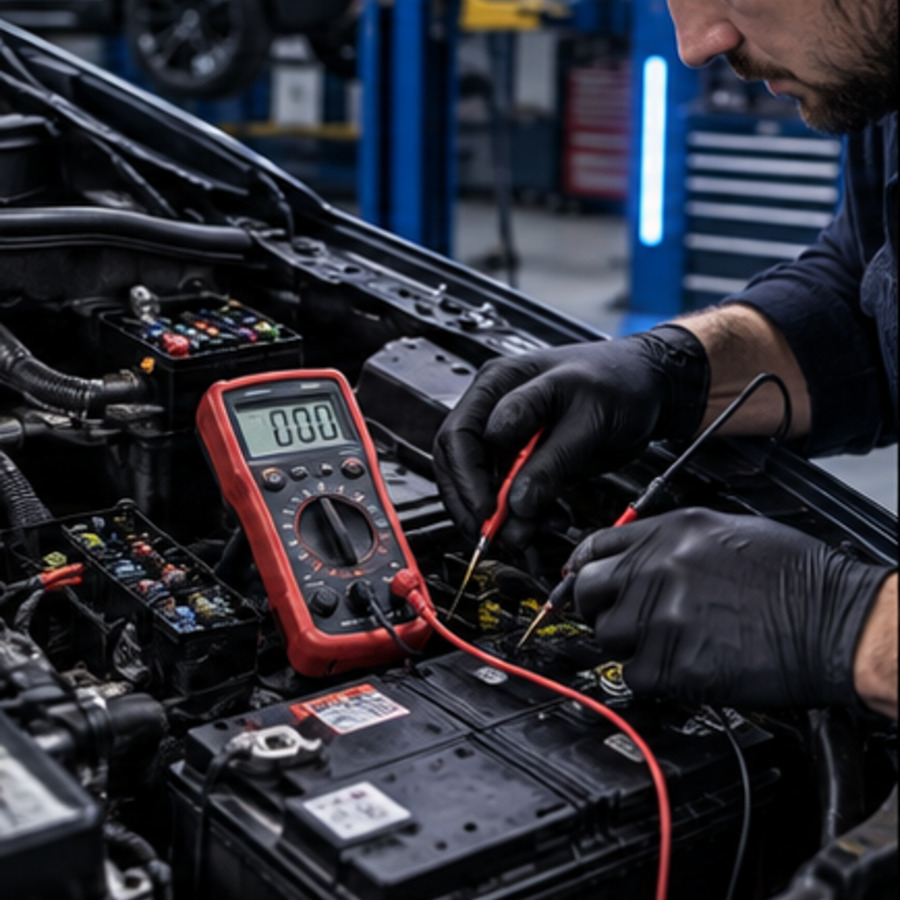
Start with the job in front of us
Wiring problems are rarely solved by colour matching. Loads, protection, grounds, signal types, network communication and component compatibility all matter. We establish what the vehicle needs to do before deciding what should be repaired, replaced or built.
Open circuits, shorts, corrosion, heat damage, previous repairs and sections of loom that need repairing or rebuilding.
Damaged terminals, broken plugs and corroded connections repaired where suitable parts and reliable access are available.
Custom wiring and system integration for engine conversions, ECU swaps and compatible control strategies.
Vehicle-side and low-voltage conversion wiring faults assessed where the equipment and requested work fall within scope.
Proper wiring work
One incorrect feed, ground, protection device or communication line can create faults far beyond the wire being worked on. The job must be understood as a whole.
We identify the vehicle, components, intended result and previous changes.
Available diagrams, pin information and measured vehicle evidence are compared.
Suitable wiring, terminals, connectors, protection and routing are selected for the application.
Operation is checked against the agreed scope before the job is treated as complete.
First enquiry
You do not need to arrive with a finished wiring diagram. Send the registration, make, model and year. That is enough for us to begin identifying the vehicle and decide what information the next conversation needs.
Vehicle registration
Make
Model
Year
For conversions, we will then ask about the engine, ECU, donor components, existing loom and the result you are trying to achieve.Honest scope
Initial mobile diagnosis may be available. Suitability depends on the vehicle, fault and access required.
Complex wiring work is workshop-based. Loom building and extended testing need controlled access and time.
Pricing follows the scope. The vehicle alone does not reveal the condition, modifications or work required.
Customer-supplied parts carry conditions. Testing or additional labour may apply when supplied items are wrong, incomplete or faulty.
Timescales depend on complexity and parts. We will not promise a completion date before the real job is understood.
Real workshop evidence
Missing connector seals allowed water into a Ford Transit loom and corroded the SID208 ECU pins. The repair needed more than another control unit: part loom, repinning, the correct seal and replacement-ECU programming all had to work together.
Often, yes. The sensible route depends on where the damage is, how much of the loom is affected and whether suitable terminals, connectors and wiring information are available. We inspect and test before recommending repair, partial rebuilding or replacement.
Yes, where the conversion can be properly scoped. The engine, ECU, donor components, vehicle systems, immobiliser strategy and communication requirements all need to work together; it is not simply a case of joining wires with matching colours.
An initial mobile inspection or diagnostic visit may be available where suitable. Complex loom building, extended testing and conversion work normally require workshop time so the vehicle and circuits can be worked on safely and methodically.
Yes, we can assess relevant vehicle-side and low-voltage conversion wiring where the job falls within our scope. Registration, make, model and year are enough to start the conversation; we will then establish what equipment and systems are involved.
Pricing depends on the vehicle, access, previous modifications, the condition of the existing loom, the conversion components and the evidence available. We need the full scope before giving a meaningful price.
Sometimes. Customer-supplied components must be identified and assessed first. Additional testing or labour may be chargeable if a supplied loom, module, connector or donor part is incorrect, incomplete or faulty.
Registration, make, model and year.